Author Archives: Louise

Lot’s of apostrophe’s and “quotation mark’s”

I just stumbled on two fun blogs: one devoted entirely to “unnecessary quote marks” and one to apostrophe abuse (when people use lot’s of apostrophe’s for plural’s etc.)

Unnecessary Quotes.com

Apostrophe Abuse.com

Here’s an example from each (with the most bizarre example I’ve seen of a misplaced apostrophe):


Kate and Pippa in the words of the poets

My father writes about some of the Kates and Pippas of literary renown …

http://www.barder.com/3200

Pippa and Kate in the words of the poets

April 30th, 2011

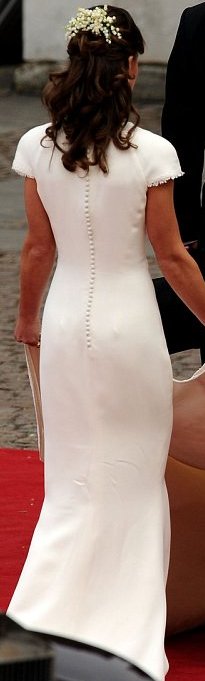
Oh, no, not that wedding again? Calm down, dear, it’s only a footnote.  According to the tabloids and the internet, Pippa Middleton, sister of the new Princess William formerly known as Kate, stole the show yesterday for many viewers, not only more than rivalling her sister’s good looks but prompting excited comments about a particular aspect of her figure.  A Daily Mirror headline, for example, screams:

Pippa Middleton bridesmaid dress sparks Facebook fan page for her bottom

and sure enough, there’s the facebook page in question, already marked as ‘liked’ by more than 44,000 connoisseurs of the anatomical feature in question.  But on a more elevated level, the catapulting to national celebrity status of the lovely Pippa must have sent at least some of us to our collected poetry of the now much neglected Robert Browning:

from Pippa Passes

The year’s at the spring
And day’s at the morn;
Morning’s at seven;
The hillside’s dew-pearled;
The lark’s on the wing;
The snail’s on the thorn:
God’s in His heaven—
All’s right with the world!

– of which the last couplet at least has achieved immortality, if the rest of the long narrative poem hasn’t.

SRD GIRL. [To PIPPA who approaches.] Oh, you may come closer: we shall not eat you! Why, you seem the very person that the great rich handsome Englishman has fallen so violently in love with! I’ll tell you all about it.

Here Browning evidently foresees the impression that some observers claim to have got from the proceedings yesterday that Prince Harry, brother of the groom, sharing responsibility for the young bridesmaids and page boys with Pippa, the sister of the bride, appeared somewhat smitten by her, being overheard (or lip-read) to whisper to her a gallant tribute to her beauty, although whether Browning’s description of young Harry as “the great rich handsome Englishman” fits the bill is for others to judge.  Anyway, I doubt if Harry’s long-time girlfriend Chelsy Davy has anything to worry about.

Cole Porter also obviously had a premonition, putting words into the mouth of the groom on the red-quilted palace balcony (only confusing the prince’s nickname with his Dad’s):

FRED:

So, kiss me, Kate, thou lovely loon,
‘Ere we start on our honeymoon.
So kiss me, Kate, darling devil divine,
For now thou shall ever be mine.

But let Shakespeare have the last word, even if he also gets a little confused over who would be speaking — William, obviously, not Harry, still on the balcony:

Kate, I cannot look greenly nor gasp out my eloquence, nor I have no cunning in protestation; only downright oaths, which I never use till urged, nor never break for urging. If thou canst love a fellow of this temper, Kate, whose face is not worth sun-burning, that never looks in his glass for love of any thing he sees there, let thine eye be thy cook. I speak to thee plain soldier: If thou canst love me for this, take me: if not, to say to thee that I shall die, is true; but for thy love, by the Lord, no; yet I love thee too…

Now, welcome, Kate: and bear me witness all,
That here I kiss her as my sovereign queen.

Well, his queen-to-be, anyway.


Woe to whom?

Welcome to our first “Glossologue”! Every month, Alison (my fellow Glosso-blogger) and I will post an example of language usage that sparks discussion and debate – and we invite you all to come and battle it out here on Glossophilia.

Feel free to weigh in and offer your insights and arguments – especially if you’re right!

*   *   *   *   *

Glossologue I: Woe to whom?

Last week Alison and I crossed swords – very briefly and  amicably – over something one of us stumbled on in the “Ethicist” column of the New York Times magazine*. Here is the statement in question:

“It’s unethical, but then again, it’s just an updated form of advertising, and woe to him who seeks truth therein.”*

It’s that pesky pronoun that knots our brows: is it really “woe to him who“? If he is the one seeking the truth, shouldn’t he have the benefit of a subjective pronoun before the only verb in that part of the sentence – “he [who] seeks”? However, he is, after all, the object of the woe being heaped, and let’s face it: without the relative clause that follows (“who seeks truth”), “woe to he” is clearly a clanger.

So, is this sentence correct, or has there been an editing booboo*? What do you think?

* this is not necessarily the final version that appeared online or in print


“What if there’s no hell?” asks Time …

“What if there’s no hell?” asks Time magazine.

Well, the subjunctive mood might find out soon, as it continues its slow demise  and enters grammatical purgatory.

In bygone days,  in olden English (before Chaucer or Shakespeare), all or most of our verbs were conjugated to reflect different grammatical ‘moods’ ranging from indicative, imperative and conditional to optative, potential and subjunctive.  Such subtle  inflections still pepper the verbs of romance languages such as French and Spanish, but the aggressive (d)evolution of English has left much of this complex conjugation behind in the dust, leaving us with most verbs expressed only in the straightforward indicative.

Thankfully, there’s a notable exception when it comes to the subjunctive mood: the one in which we defy reality or reason, we let our imaginations fly beyond the possible, we wonder and wish, yearn and desire, and we allow the ‘what ifs” to have their very own voice.  It’s in the use of our most common verb, which is almost not a verb because it represents the very essence of soul and identity: “to be”.

“If I were you” is probably the most common and undisputed example of this most poetic of grammatical moods, and the easiest way to explain it. In normal indicative mood, when “I” is the subject of the verb “to be” it is conjugated as “I am” or “I was”. But the moment that element of doubt, hypothesis, desire or contrariness is introduced, we abandon the different inflections for different subjects, and suddenly we’re all in the same boat, using the same form of being: “were”. “If I were you, I would.” “If he were better behaved, he wouldn’t.”

Noel Coward, imagining a different reality, wrote whimsically:

“I believe in doing what I can
In crying when I must
In laughing when I choose
Hey ho, if love were all
I should be lonely.”

The wistful Christmas song “In Dulci Jubilo” ends with a plaintive wish to be transported elsewhere: “Oh that we were there.”

J. S. Bach, in his sacred song “Komm, süßer Tod” (“Come, Sweet Death, Come Blessed Rest”) captures in his music the desire for death and heaven; the words, translated from the German, capture in sweet subjunctive that same yearning for a journey of body and soul:

“Come, sweet death, come blessed rest!
Oh, that I were but already
there among the hosts of angels”

The subjunctive is alive  and well when we ask that you be patient, when he proposes that they be united in their cause, when I urge that the situation be addressed, when they prefer that she be kind, or when you request that she be there.

Now, as Time asks about that most elusive of truths, the atheist will argue convincingly that there is no hypothesis, uncertainty or impossibility – and therefore no need for a subjunctive mood – in the question the magazine poses. Believers  in an after-life would surely prefer a “were” in place of that contracted “is”: “What if there were no hell: would we all be saved?” Using the subjunctive immediately assumes and defines a set of beliefs and realities. Conversely, a simple difference in belief and religious conviction can determine not just the grammatical mood but the very essence of the question being posed.

“What if there were no subjunctive?” Oh that we never know …


Thanks, Damian, for the Time tip-off …

Mea culpa, Anna Bolena

We pride ourselves at 21C on getting most of our information right – factually and grammatically. But as Glenn often reminds us: only Allah is perfect. And perfect today’s press release about Anna Netrebko certainly wasn’t, as a journalist rightly pointed out to me this afternoon.

Can you spot the mistake? http://www.21cmediagroup.com/mediacenter/newsitem.php?i=651 [Oh – it’s been fixed. – Ed]

I’ll give you the paragraph in question.

“The first in a trilogy of operas Gaetano Donizetti wrote about the Tudor period (Maria Stuarda, named after Mary, Queen of Scotts, and Roberto Devereux, about the reputed lover of Elizabeth I, are the other two), Anna Bolena follows the tragic demise of Anne Boleyn, the second wife of Henry VIII who literally lost her head because she could not bare the King a male heir.  The soprano role is considered one of the most challenging in the bel canto repertoire, making the opera difficult to cast and rarely performed.  The fall 2011 production at the Met, which is staged by David McVicar and also stars Garanca as Giovanna, in fact marks the work’s Met premiere.”

Brownie points if you can spot more than one mistake …


Happy posters

“This poster can make you happier than any other on the subway.”

So reads an ad for the School of Practical Philosophy that graces the occasional NYC subway car. The problem is, it just doesn’t make me happy. It presses all my buttons, has me reaching for my red pen, and makes me think I’m a subway poster, which I don’t think I am.

If I’m supposed to be happier than “any other”, I ask myself this: than any other what? Than any other poster on the subway? Well, I’m posting on this blog, which makes me a poster, and I am on the subway (at least when I’m reading the ad), so I guess I’m another poster on the subway. But I don’t think that’s what the School of Practical Philosophy is getting at. Or maybe it is.

Perhaps it’s trying to say that the poster can make me happier than any other poster can. Ah: but then why leave out the can? Perhaps because it suggests a can of posters?

Can the School of Practical Philosophy possibly mean that its ad can make me happier than any other human – or reader, or thinker, or philosopher, or nit-picker – on the subway? But what happens when I resurface from the belly of the earth, blinking in the hot sunlight. Will I still be happy?


There’s no tense like the present

Published in The Globe and Mail, Wednesday March 9

http://m.theglobeandmail.com/news/arts/russell-smith/theres-no-tense-like-the-present/article1935211/?service=mobile

There’s no tense like the present

RUSSELL SMITH

Last updated Friday, Mar. 11, 2011 2:50PM EST

Lead image

When is the last time you have smoked? (Reuters)

A doctor friend tells a story that illustrates why it’s important to understand verb tenses.

A patient whose first language is not English is asked about quitting smoking. He says, “I try. I don’t smoke for six weeks.”

The simple present is the only verb tense the man knows, so it’s impossible to tell if he is saying that he will try, and is aiming for six weeks of abstention; or that he has been trying, and hasn’t had a ciggie for six weeks; or that he tried, and abstained for six weeks (but has relapsed).

Rephrased questions from the doctor couldn’t provoke any more precise answer, so the doctor still doesn’t know what shape the guy is in.

This is a familiar limitation for new speakers of any language, but it’s particularly tricky in English, which has a wide variety of verb structures with subtle distinctions that don’t exist in many other languages.

It is possible that the man wanted to say “I haven’t smoked for six weeks” – that’s called the present perfect – but even native speakers of English have trouble with that. It’s an odd structure, one that does not translate exactly into French, for example.

Because of the strangeness and subtlety of this tense and aspect (definitions coming in a moment), it is frequently avoided, as in “I didn’t smoke yet” instead of “I haven’t smoked yet.” Or just misused: I have heard Canadian radio announcers say such head-scratchers as “There has been an acquittal last night” or “A train has derailed on Friday.”

I have made the plea before for the continued oiling and maintenance of this gleaming, intricate mechanism of the language, but nothing seems to slow its rust. So here are a few more arguments for respecting its complexity (if only for the sake of your medical charts).

First, tense and aspect. All verbs in sentences can be described as having a tense (present, past, future), an aspect (how exactly in the present, past, future) and a mood (subjunctive, indicative, imperative etc). The moods we will leave for a later column. Aspect means that you can use a variety of present forms with gently differing meanings. “I smoke,” for example (simple present), has different implications from “I am smoking” (progressive present) or “I do smoke” (intensive present).

All those are present tenses. And so is “I have smoked.” It’s commonly described as being a past tense, but it’s not helpful to think of it that way. Rather, it is a perfect aspect of the present tense.

I know, the present perfect looks a lot like the French passé composé (“j’ai fumé”) or the Italian passato prossimo (“io ho fumato”), but it does not mean the same thing. In French and Italian, those are past tenses. So you may say “j’ai fumé hier” and it makes sense – I smoked yesterday. “I have smoked yesterday,” however, does not sound like natural English. This aspect is not normally used in a sentence referring to a specific moment in the past.

If you say “I have smoked,” it refers to your present state – you are now in the state of having smoked. This is why we often use this structure with the words “already,” “since,” “recently” or “yet.” The sentence may refer to a past event, but it is being described because of its consequences for the present. If you mention a specific moment in the past you use the simple past, “Yesterday, I smoked.”

Here’s a simple demonstration: If you say “I ate this morning,” it means it is now afternoon. If you say “I have eaten this morning,” it means it is still morning.

A final proof of its presentness: Try to imagine using this aspect with a dead person as the subject. “Michael Jackson has eaten.” Doesn’t make sense, right? (“Michael Jackson last ate in 2003,” however, is a perfectly coherent sentence.)

So, if the patient above spoke elegant English and was trying to say he was currently off cigarettes and had been for six weeks, he would have said “I have not smoked for six weeks” – and isn’t that, if you think about it, just amazingly economical for such a complicated and nuanced thought?

And wouldn’t it be better for your health if you could communicate your patterns so precisely – maybe even revelling in such high-level acrobatics as “I have been smoking since this morning?”

Okay, maybe not, but it’s at least delightful just to have the ability.

Published on Wednesday, Mar. 09, 2011 4:30PM EST

None the wiser

A quick Google search of the phrase “none of them was” turns up 5,290,000 results. A similar search, but with ‘none’ used as a plural rather than singular pronoun (“none of them were”) turns up half as many results again: 8,750,000. So clearly the word “none” is used more often as a plural pronoun.

I have always believed – ‘quite’ emphatically (see previous post), and perhaps even obnoxiously – that “none” is a contraction of the words “no one”, and as such it should always be treated and used as a singular pronoun. But I couldn’t have been more wrong, as Fowler points out.

According to Fowler’s Modern English Usage (from a 1949 edition, but that’s modern enough for me), “It is a mistake to suppose that the pronoun is sing. only & must at all costs be followed by sing. verbs &c.; the OED explicitly states that pl. construction is commoner.”

And sure enough, OED explains more fully:

“In sense 1 of the pronoun, none can be followed by a singular or plural verb according to the sense. If the sense is ‘not any one of’ a singular verb is used, e.g. None of them is any good, while if the sense is simply ‘not any of’ a plural verb is used, e.g. None of them want to come. The use of the singular verb is more emphatic.”